Imagine this.
You are stopped at a red light in Pasadena. Your hands are on the wheel, your seat belt is fastened, and you are watching the intersection ahead.
Behind you, another driver looks down for only a few seconds.
Maybe a text arrived.
Maybe Google Maps displayed the next turn.
Maybe an Instagram notification appeared.
Maybe the driver was answering a work call or adjusting something on the dashboard touchscreen.
Then comes the impact.
Your head snaps backward. Your vehicle is pushed forward. In seconds, an ordinary afternoon becomes an ambulance ride, medical appointments, missed work, an insurance claim and questions you never expected to ask.
One of the most important is:
What was the other driver doing in the seconds before the crash?
In 2026, distracted driving is about much more than texting. Today’s vehicles are rolling digital environments filled with smartphones, navigation systems, infotainment screens, work applications, social media, delivery platforms and constant notifications.
And while a distracted driver may look away for only seconds, the person they injure may live with the consequences for months—or years.
If you were injured because another driver may have been distracted, evidence can matter enormously. Some of it may disappear quickly.
Call Doyle Accident & Personal Injury Attorneys at 626-737-0036 for a free case evaluation.
Doyle has offices in Pasadena, Alhambra and Monterey Park, Los Angeles County, California.
Distracted Driving Is Not Just TextingPeople on the Road
The National Highway Traffic Safety Administration defines distracted driving as any activity that diverts attention from safely operating a vehicle. It can include texting, talking on a phone, eating, interacting with passengers, adjusting entertainment systems or using navigation equipment.
NHTSA reported that 3,208 people were killed and more than 315,000 were injured in crashes involving distracted drivers in 2024. NHTSA has also acknowledged that distracted-driving crashes can be difficult to identify after the fact, so official statistics may not capture every incident. (nhtsa.gov)
Why can distraction be so difficult to prove?
Because unlike alcohol impairment, distraction may leave no obvious physical measurement.
After a collision, the driver can put the phone down. The screen can go dark. An app can close.
The driver may simply tell police:
“I never saw the car stop.”
But that statement raises another question:
Why didn’t the driver see it?
Five Seconds Can Change a Life
NHTSA explains that reading or sending a text can take a driver’s eyes away from the road for about five seconds.
At 55 mph, that is roughly equivalent to traveling the length of a football field with your eyes closed. (nhtsa.gov)
Consider what can happen during five seconds in Los Angeles County.
Traffic can stop on the 210 Freeway.
A pedestrian can enter a Pasadena crosswalk.
A motorcycle can move into a driver’s blind spot.
A child can step into the roadway.
A vehicle can brake suddenly on Valley Boulevard or Main Street.
Five seconds may sound brief.
At driving speed, it can be an extraordinary distance.
Californians Recognize the Risk
California’s Office of Traffic Safety identifies mobile devices as the leading form of driver distraction. In its 2025 public-opinion survey, 71.4% of Californians identified distracted driving caused by texting as one of their top roadway-safety concerns. (ots.ca.gov)
The modern smartphone is part telephone, GPS, camera, entertainment center, messaging system, work device and social-media platform.
Every function can compete with the road for a driver’s attention.
Vehicles themselves may now include large touchscreens, navigation displays, digital climate controls, entertainment applications and multiple information screens.
Technology can make driving easier.
It can also create more opportunities to look away.
California Law Goes Beyond “Don’t Text and Drive”
California Vehicle Code Section 23123.5 generally prohibits drivers from holding and operating handheld wireless phones or electronic communications devices while driving, except as permitted for hands-free operation.
A properly mounted device may generally be operated with a single swipe or tap to activate or deactivate a function, subject to the requirements of the statute. (leginfo.legislature.ca.gov)
That means California’s law is broader than simply banning text messages.
One important California appellate decision makes this especially clear.
“I Was Only Looking at GPS” May Not Be a Defense
In the 2025 case People v. Porter, a driver was cited after holding a cellphone while driving and looking at a mapping application.
The driver argued that merely viewing navigation directions did not amount to “operating” the phone.
The California Court of Appeal disagreed.
The court concluded that California Vehicle Code Section 23123.5 prohibits using a handheld phone’s functions while driving, including viewing a mapping application while holding the device. (law.justia.com)
The decision reflects a practical reality:
A phone does not have to be used for a text or telephone call to become a dangerous distraction.
GPS can distract.
Social media can distract.
Videos can distract.
Notifications can distract.
Delivery apps can distract.
Simply looking at a handheld screen can distract.
Three Types of Distraction
Distracted driving is often divided into three broad categories.
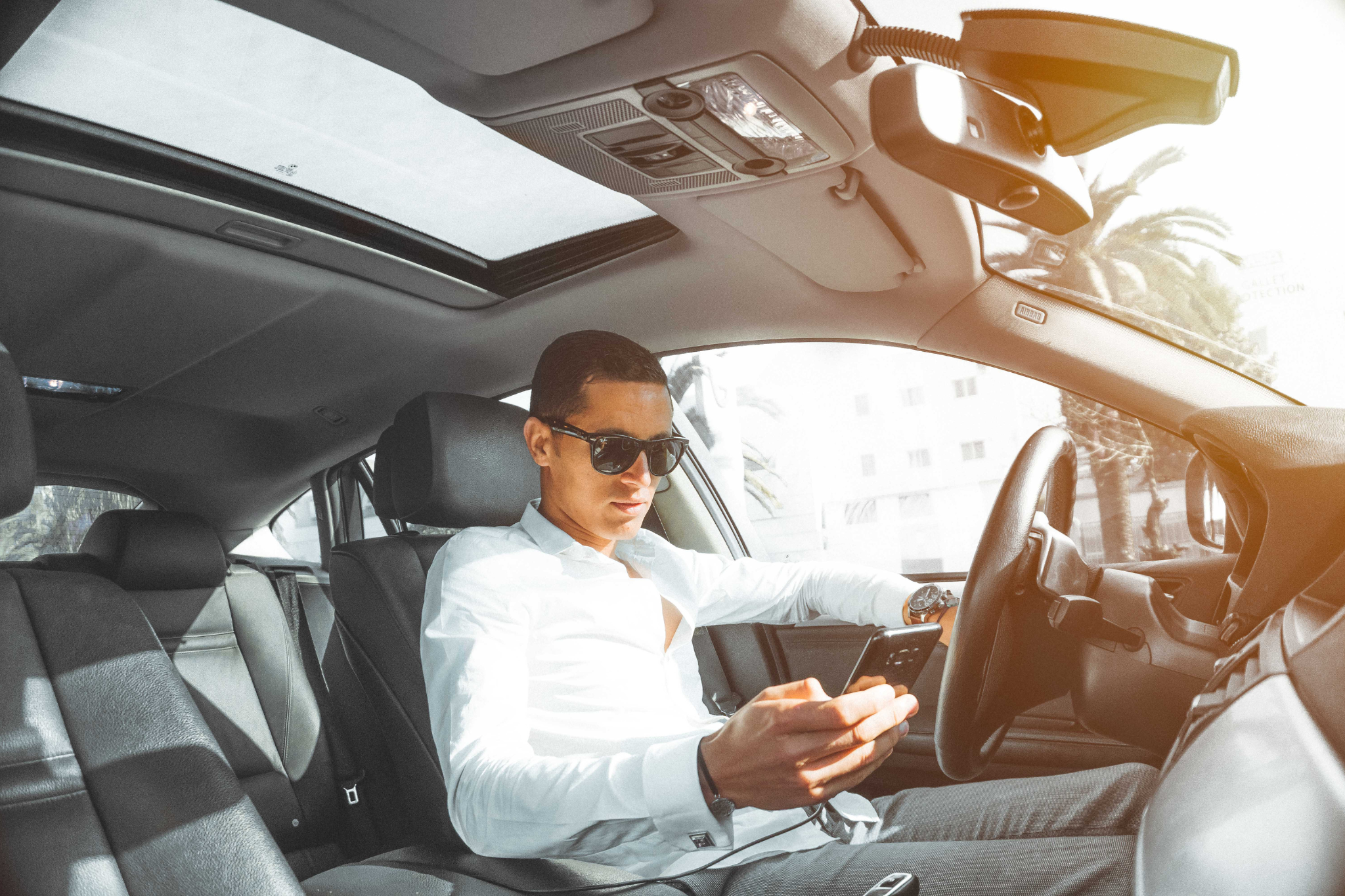
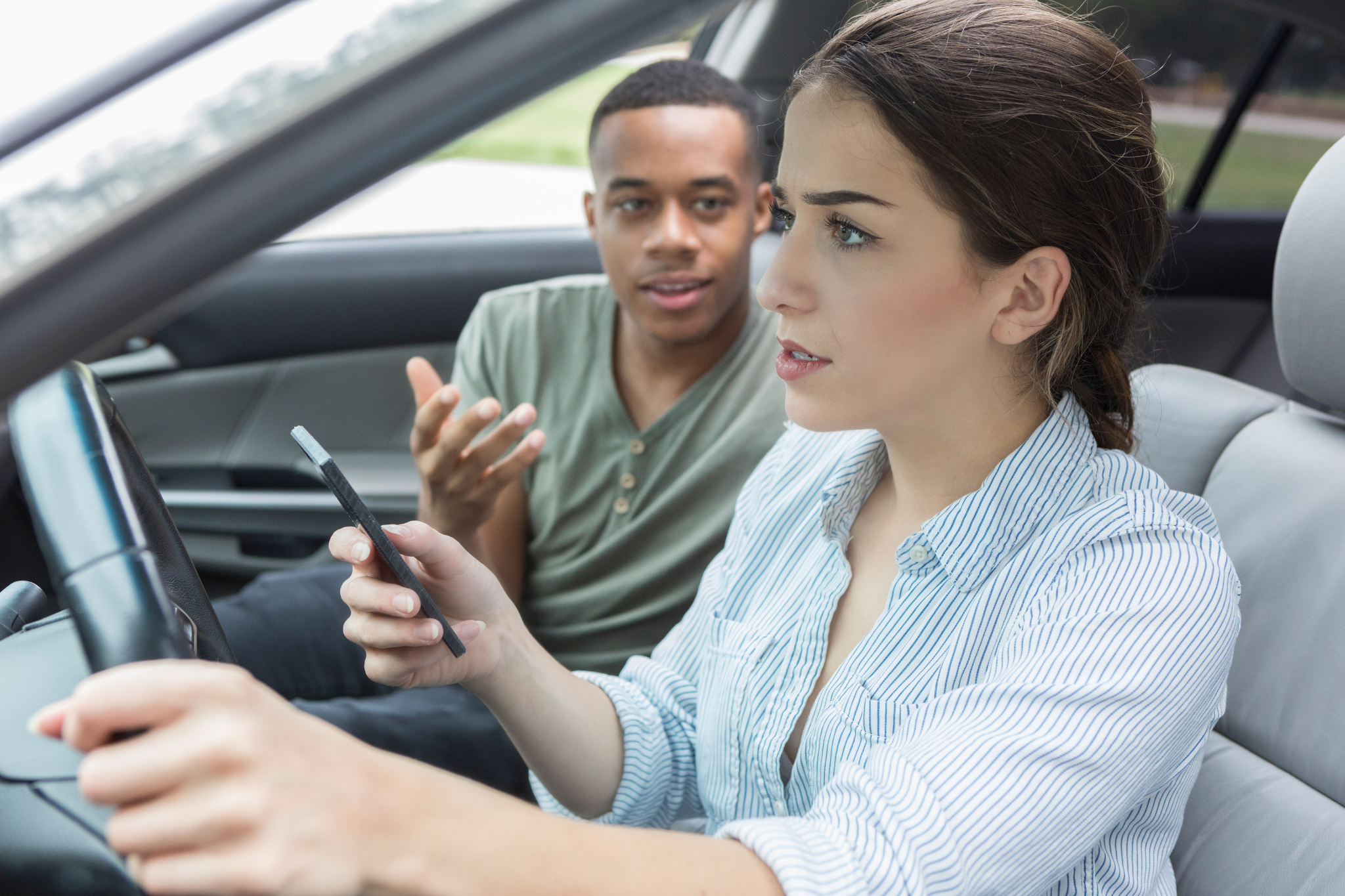
Visual distraction occurs when a driver looks away from the road—perhaps at a text, GPS screen, social-media notification or passenger.
Manual distraction occurs when the driver removes a hand from the wheel to hold a phone, type, eat or adjust something.
Cognitive distraction occurs when the driver’s mind is focused on something other than driving, such as a stressful work conversation or emotionally intense phone call.
Texting can combine all three.
The driver’s eyes are looking at the phone, a hand is manipulating it, and the driver’s mind is focused on the message instead of traffic.
How Can Distracted Driving Be Proven?
The other driver may never admit to looking at a phone.
Instead, you may hear:
“I didn’t see you.”
“You stopped too quickly.”
“I don’t know what happened.”
That is why an investigation may need to look beyond what the driver says.
Potential evidence can include:
- Phone and call records
- Text-message timestamps
- Social-media activity
- Navigation or app-related evidence
- Dashcam video
- Business or residential surveillance footage
- Witness testimony
- Vehicle data
- Commercial fleet records
- Dispatch communications
- Driver work schedules
Not every type of electronic information is automatically available. California Courts notes that phone records, emails, social-media information and text messages receive special legal protections when sought through subpoenas. (selfhelp.courts.ca.gov)
That is one reason legal procedures and early investigation can matter.
Evidence Does Not Always Last
People often assume digital evidence exists forever.
It may not.
A convenience store’s surveillance system may overwrite footage.
A dashcam recording may disappear.
A vehicle may be repaired or sold.
Witnesses may forget details.
A company may retain electronic records only for a limited period.
A phone may be replaced.
If someone suffers a serious injury in a suspected distracted-driving crash, waiting several months before investigating may mean important evidence is no longer available.
An attorney may be able to identify relevant evidence and take appropriate steps to request its preservation.
Can a Cellphone Violation Help Prove Negligence?
Potentially.
California Evidence Code Section 669 establishes circumstances in which violation of a statute or regulation can create a presumption concerning failure to exercise due care.
Among other requirements, the violation must have caused the injury, the accident must be the kind the statute was designed to prevent, and the injured person must belong to the group the law was designed to protect. (leginfo.legislature.ca.gov)
So a cellphone citation does not automatically mean an injured person wins a lawsuit.
But evidence that the driver was unlawfully using a handheld device may become highly relevant when combined with other evidence showing how the collision happened.
What If the Driver Was Working?
Suppose a delivery driver was checking an assignment.
A salesperson was talking to a customer while traveling between appointments.
A contractor was reading directions to the next job site.
Or an employee was responding to instructions from a supervisor.
Another important question may arise:
Was the driver acting within the scope of employment?
Depending on the circumstances, an employer may potentially become part of the liability investigation.
Commercial cases can also involve evidence unavailable in an ordinary accident, such as:
- Dispatch logs
- Company phone policies
- Vehicle tracking
- Work schedules
- Fleet cameras
- Driver training records
- Commercial insurance information
The same issue can arise with rideshare and app-based delivery drivers. The driver’s activity and status within the app at the moment of the collision may affect the insurance and liability analysis.
The Injuries Can Last Far Longer Than the Distraction
A distracted-driving crash can cause injuries ranging from whiplash and broken bones to traumatic brain injuries, spinal injuries and permanent disability.
Some symptoms appear immediately.
Others become clearer later.
An injured person may face physical therapy, surgery, lost income, chronic pain, anxiety about driving and major changes in everyday life.
That is why accident victims should be careful about treating an insurance company’s early settlement offer as the final word before the medical consequences are understood.
The driver’s distraction may have lasted five seconds.
The victim’s recovery may last years.
What Should You Do After a Suspected Distracted-Driving Accident?
First, obtain appropriate medical care.
If possible, document the crash scene, vehicle damage, road conditions and surrounding area. Identify witnesses before they leave. Look for nearby businesses, homes, buses or vehicles that may have cameras.
Preserve your photographs, medical records, repair information and communications.
Be cautious about posting details of the accident or your injuries on social media.
And before giving a recorded statement or signing a settlement release, understand whom the insurance adjuster represents and what legal effect your statement or signature may have.
For a serious injury, particularly one involving suspected phone use, a commercial driver or potentially disappearing electronic evidence, obtaining legal advice promptly may be especially important.
“I Didn’t See You” Should Not Be the End of the Story
When another driver says:
“I didn’t see the red light.”
“I didn’t notice traffic had stopped.”
“I never saw the pedestrian.”
“I didn’t see the motorcycle.”
there may be an important follow-up question:
Why not?
Sometimes the explanation is innocent.
But sometimes the answer may be found in a phone, navigation app, dashboard screen or digital record.
If you or someone you love has been injured by a driver who may have been texting, checking GPS, using social media, interacting with an app or otherwise driving distracted, you deserve to know what happened.
And the sooner the investigation begins, the better the opportunity may be to preserve evidence.
Call Doyle Accident & Personal Injury Attorneys at 626-737-0036 for a free case evaluation.
Doyle Accident & Personal Injury Attorneys serves accident victims throughout Los Angeles County from offices in:
Pasadena
301 N. Lake Avenue, 6th Floor
Pasadena, CA 91101
Alhambra
560 W. Main Street, Suite C-244
Alhambra, CA 91801
Monterey Park
199 W. Garvey Avenue, Suite 206
Monterey Park, CA 91754
Call 626-737-0036 for your free case evaluation.
Because another driver’s few seconds of distraction should not prevent you from understanding your rights and your legal options.
Glossary
Causation: The legal connection between conduct and the injury or damages that resulted.
Cognitive Distraction: When a driver’s mental attention is diverted from driving.
Comparative Fault: California’s system for assigning percentages of responsibility when multiple parties contributed to an accident.
Damages: Compensation that may be available for legally recognized losses resulting from an injury.
Digital Evidence: Electronically stored information potentially relevant to an accident investigation.
Discovery: The formal process used in litigation to obtain relevant evidence and information.
Distracted Driving: Driving while attention is diverted from safely operating the vehicle.
Hands-Free: Use of a communication device without holding it, subject to California’s legal requirements.
Liability: Legal responsibility for an injury or loss.
Manual Distraction: A distraction that causes a driver to remove a hand from the task of controlling the vehicle.
Negligence: Failure to exercise reasonable care under the circumstances.
Preservation Letter: A communication requesting that potentially relevant evidence be retained.
Visual Distraction: Anything that causes a driver to look away from the roadway.
Vicarious Liability: A doctrine under which an employer or another party may, under qualifying circumstances, bear legal responsibility for another person’s conduct.
References and Resources
- National Highway Traffic Safety Administration — Distracted Driving. Distracted-driving statistics, risks and safety information. (nhtsa.gov)
- California Office of Traffic Safety — Distracted Driving. California distracted-driving information and 2025 public-opinion findings. (ots.ca.gov)
- California Vehicle Code Section 23123.5. California’s handheld wireless-device restrictions and mounted-device requirements. (leginfo.legislature.ca.gov)
- People v. Porter, California Court of Appeal, 2025. Appellate decision addressing handheld cellphone use for navigation while driving. (law.justia.com)
- California Evidence Code Section 669. Requirements governing the statutory presumption concerning failure to exercise due care. (leginfo.legislature.ca.gov)
- California Courts Self-Help — Subpoenas and Evidence. Guidance regarding subpoenas and protected electronic information. (selfhelp.courts.ca.gov)
- Doyle Accident & Injury Attorneys — Contact Information. Firm contact information and Pasadena, Alhambra and Monterey Park office locations. (doyleaccidentinjuryattorneys.com)
This article is for general informational purposes and does not constitute legal advice. Every personal-injury matter depends on its individual facts, available evidence and applicable law.
#DistractedDrivingAccidentLawyer #DistractedDrivingLawyerCalifornia #PasadenaCarAccidentLawyer #PasadenaPersonalInjuryAttorney #AlhambraCarAccidentLawyer #MontereyParkAccidentLawyer #LosAngelesCountyCarAccidentLawyer #TextingAndDrivingAccident #CellPhoneAccidentLawyer #CaliforniaDistractedDriving #PersonalInjuryCalifornia #SanGabrielValleyAttorney #DoyleAccidentAttorneys