Traffic is moving at freeway speed one moment and slowing to a crawl the next.
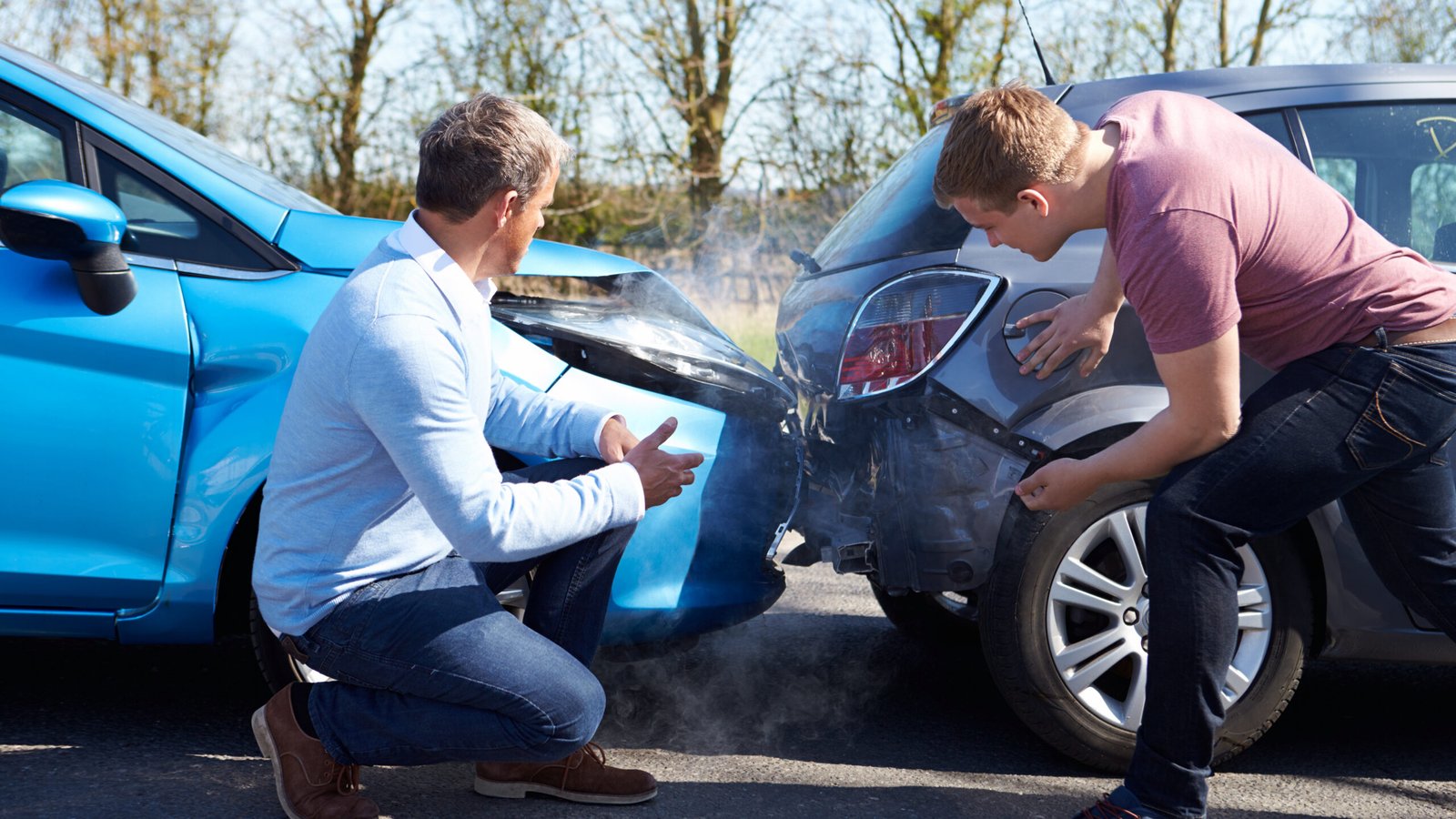
Anyone who regularly drives the 210, 10, or 605 Freeway knows how quickly conditions can change. Brake lights suddenly appear ahead. Traffic compresses around an interchange. A driver looks down for a few seconds. Someone follows a little too closely. Then comes the sound no driver wants to hear: tires, impact, breaking glass, and the unmistakable jolt of being struck from behind.
A rear-end collision may take only seconds, but what happens during the next few minutes, days, and weeks can affect your health, your finances, and your ability to recover compensation for an injury.
That is especially true on Southern California freeways, where a seemingly straightforward two-car collision can quickly turn into a multi-vehicle crash. You may be trying to understand whether it is safe to remain in your car, whether you should move to the shoulder, who caused the collision, whether your neck or back pain is serious, what information you need from the other driver, and how you are going to pay for repairs and medical treatment.
The best time to learn what to do after a rear-end accident is before you need the information. But if the crash has already happened, the most important thing is to know that you have options and that the decisions you make now can matter later.
A rear-end crash on a freeway is not always a minor accident
People sometimes dismiss rear-end collisions as fender benders. That can be dangerously misleading.
Imagine sitting in slowing traffic on the 210 Freeway near Pasadena. You are traveling perhaps 15 or 20 miles per hour when traffic comes to a stop. The SUV behind you is still moving substantially faster when it hits the rear of your vehicle. Your car may not look destroyed afterward, but your body has still experienced a sudden transfer of force.
Or imagine driving on Interstate 10 through the San Gabriel Valley when congestion appears ahead. You brake normally. The driver behind you does not react in time and pushes your vehicle into the car in front of you. What began as a rear-end collision has now become a three-car chain reaction. Suddenly, everyone is asking the same question: Who is responsible?
The answer depends on the evidence and circumstances, not simply on which vehicle has front-end damage and which has rear-end damage.
That is why it is important to treat a freeway rear-end crash seriously from the beginning.
First priority: protect yourself from a second collision
On a freeway, the danger may not end when the first impact stops.
Other vehicles can still be approaching at highway speed. A damaged car sitting in a traffic lane can become the site of another collision within seconds.
California DMV guidance says drivers involved in a collision must stop. If someone is hurt, the DMV advises calling 911 immediately. If no one is injured, drivers should move their vehicles out of traffic. California Highway Patrol guidance similarly states that vehicles involved in property-damage-only crashes should be moved out of the roadway to a safe location, such as the shoulder or the next freeway exit. CHP also notes that vehicles in injury collisions may be moved to the shoulder when necessary for safety while the drivers remain at the scene and fulfill their legal obligations.
Consider a rear-end collision in the middle lanes of the 605 Freeway. Your instinct might be to get out immediately and inspect the bumper. But standing between vehicles in active freeway traffic could expose you to a much greater danger.
The safer first question is not, “How bad is my car?”
It is, “Are the people involved safe, and are we in danger of being hit again?”
If emergency assistance is needed, call 911. Follow instructions from law enforcement and emergency personnel.
Do not assume you are uninjured simply because you can walk away
After a crash, adrenaline and confusion can make it difficult to understand exactly how you feel.
You may get out of the vehicle believing you are fine, only to notice increasing discomfort later. Neck stiffness, back pain, headaches, shoulder pain, dizziness, or other symptoms may become more noticeable after the immediate stress of the collision has passed.
This is one reason it can be unwise to make sweeping statements such as “I’m completely fine” immediately after a crash.
That does not mean you should exaggerate an injury. It means you should describe what you know truthfully and allow medical professionals to evaluate symptoms when appropriate.
Imagine being rear-ended on the 10 Freeway on your way to work. You feel shaken but decide you are probably all right. By evening, turning your head becomes painful. The next morning, getting out of bed is difficult. If symptoms develop or worsen, seeking appropriate medical care serves two important purposes. Most importantly, it helps protect your health. It also creates medical documentation connecting your symptoms, diagnosis, and treatment with the collision.
California Courts identifies medical bills, doctor reports, photographs, witness statements, and police reports among the kinds of evidence that can support a personal injury case.
Who is at fault in a California rear-end collision?
Many people believe the rear driver is automatically at fault in every rear-end accident.
The reality is more nuanced.
California Vehicle Code section 21703 requires a motorist not to follow another vehicle more closely than is reasonable and prudent considering the speed of the vehicles, traffic, and roadway conditions. The California DMV also recommends the three-second rule as a way to maintain a safer following distance.
That rule is particularly important in freeway traffic.
If a driver is traveling too closely behind another vehicle and cannot stop when traffic slows normally, the driver’s following distance can become important evidence of negligence.
For example, suppose traffic on the 210 slows because of congestion near an interchange. You brake along with everyone else. The driver behind you has been following several feet from your bumper and cannot stop in time. Evidence showing that the driver was following too closely may strongly affect the liability analysis.
But rear-end liability is not automatic.
Suppose a driver suddenly crosses multiple lanes on the 605, enters directly in front of another vehicle with inadequate space, and immediately brakes. Or imagine a chain-reaction collision in which Vehicle C strikes Vehicle B and forces Vehicle B into Vehicle A. Simply looking at the final position of the vehicles may not tell the entire story.
California follows comparative-fault principles. Under California’s civil jury instructions, when an injured plaintiff’s own negligence contributed to the harm, damages can be reduced according to the percentage of responsibility attributed to the plaintiff.
That means identifying who hit whom is only the beginning of the investigation. The real questions include why the collision occurred, how each vehicle was moving, whether someone changed lanes, whether traffic had already stopped, whether another vehicle initiated a chain reaction, and whether any driver contributed to the crash.
Evidence disappears quickly on the freeway
One of the biggest challenges after a freeway collision is that the scene changes almost immediately.
Vehicles are moved. Traffic begins flowing again. Debris is cleared. Tow trucks arrive. Witnesses continue on their way. Road conditions change. A few hours later, the location may look as though nothing ever happened.
If it is safe to do so, photographs and video can be extremely valuable.
Take pictures of the damage to all involved vehicles, not just your own. Photograph license plates, the general roadway, debris, skid marks if visible, traffic conditions, lane positions if they can safely be documented, and any visible injuries.
Do not endanger yourself by walking into freeway traffic to get a better photograph.
Also look for witnesses. A neutral driver who stopped because they saw what happened may later be far more important than you realize.
CHP specifically recommends obtaining contact information from possible witnesses and making notes about the time, traffic conditions, weather, and events leading to the collision.
For example, suppose the other driver initially admits, “I was looking at my phone and didn’t see traffic stop.” A witness standing nearby may have heard that statement. Later, when an insurance claim is filed, the driver’s account may change. The witness could become significant evidence.
Exchange the right information
California DMV guidance instructs drivers involved in collisions to provide their driver’s license, vehicle registration, insurance information, and current address to the other people involved and to law enforcement.
At a minimum, obtain enough information to identify:
The other driver.
The vehicle owner, if different.
The vehicle.
The insurance company and policy information.
Any passengers.
Any witnesses.
The responding law enforcement agency.
If the driver is operating a commercial truck, delivery van, company car, rideshare vehicle, or another vehicle being used for work, additional information can become important.
Suppose a delivery driver rear-ends your vehicle while making deliveries for an employer. The driver may not be the only potentially responsible party. California Courts notes that in personal injury cases, potential defendants can sometimes include an employer when the person causing the injury was working at the time.
That is why simply obtaining the driver’s personal insurance card may not tell the whole story.
Avoid arguing about fault on the shoulder of the freeway
A collision can make people angry, frightened, embarrassed, or defensive.
The driver who hit you may apologize repeatedly. Another driver may insist the crash was your fault. Passengers may start arguing about who changed lanes first.
The shoulder of the 10 Freeway is not the place to conduct a legal investigation.
CHP advises drivers not to accept or place blame at the scene. Instead, gather information and allow the evidence, insurers, investigators, and, when necessary, attorneys to address liability.
Be cooperative. Be truthful. Exchange the required information. But avoid making guesses about speed, distances, injuries, or legal responsibility when you do not know the answers.
Do I need to report the crash to the California DMV?
Possibly, and this requirement surprises many drivers.
California requires an SR-1, Report of Traffic Accident Occurring in California, to be submitted to the DMV within 10 days when someone is injured, even if the injury is minor, someone is killed, or property damage exceeds $1,000. The SR-1 requirement applies regardless of who caused the collision. It is also separate from any report made to the police, CHP, or an insurance company.
That last point is particularly important.
You should not assume that because CHP prepared a collision report, your DMV reporting obligation has been handled for you.
Consider a relatively modest-looking rear-end collision. One bumper, a rear hatch, sensors, lighting, paint, and labor can quickly push property damage over the reporting threshold. If you are uncertain whether an SR-1 is required, it is better to understand the requirement promptly rather than discover it after the deadline.
The DMV also advises that when a collision causes injury or death, a report to law enforcement is required within 24 hours.
Call your insurance company, but remember that an insurance claim is a financial transaction
Insurance companies play an essential role after automobile collisions, but it is important to understand what the process is.
The other driver’s insurer is investigating a claim against its policyholder. Your own carrier is administering the coverages contained in your contract. Each insurer will evaluate liability, damages, documentation, policy limits, and other factors that affect how much it must pay.
That does not make an insurance adjuster dishonest. It simply means the insurance company has interests of its own.
Give accurate information. Notify your carrier as required by your policy. Keep records of communications. But be cautious about giving extensive recorded statements, signing broad medical authorizations, or accepting a quick settlement before you understand the extent of your injuries and losses.
Imagine that two days after a rear-end collision, an adjuster offers you money to settle. At that moment, you may not know whether your doctor will recommend physical therapy, specialist care, additional imaging, or time away from work. Once a claim is fully and finally settled and an enforceable release is signed, reopening the matter may be difficult or impossible.
Understanding what you are giving up before signing matters.
What if the driver who hit you does not have enough insurance?
This has become an important issue in California.
Standard California automobile policies must now carry minimum liability limits of $30,000 for bodily injury or death to one person, $60,000 for bodily injury or death involving multiple people in one accident, and $15,000 for property damage. Those minimums became effective in 2025.
But minimum coverage does not necessarily mean adequate coverage.
Imagine a rear-end collision injures three members of one family. One needs emergency treatment, another requires follow-up care, and the third misses several weeks of work. Serious losses can exceed minimum liability limits surprisingly quickly.
That is when your own automobile policy becomes particularly important.
California’s Department of Insurance explains that uninsured motorist and underinsured motorist coverage can provide benefits when an at-fault driver has no liability insurance or not enough insurance to compensate for covered bodily injuries. Medical Payments coverage, commonly called MedPay, can also pay certain medical expenses for occupants of the insured vehicle regardless of who was at fault, subject to the policy’s terms and limits.
Do not assume the other driver’s policy is your only possible source of recovery. Review your own policy as well.
What compensation can an injured person seek?
A rear-end collision claim can involve much more than the cost of repairing a bumper.
California Courts explains that personal injury damages may include medical bills, lost wages, ongoing treatment, emotional harm, and future problems caused by the injury.
Depending on the circumstances, a claim may involve emergency medical treatment, physician appointments, physical therapy, lost earnings, future treatment needs, damage to the vehicle, rental or transportation expenses, pain, and other losses legally attributable to the collision.
Consider an office worker who suffers a painful back injury after being rear-ended on Interstate 10. She can still work, but sitting for long periods becomes difficult. She attends medical appointments before work, requires treatment, and misses several days when symptoms become severe.
Now consider a construction worker injured in an almost identical crash. His physical job requires lifting, climbing, bending, and carrying equipment. Even a similar physical injury can have dramatically different financial consequences because the injury interferes with his ability to perform his occupation.
That is why there is no universal settlement value for a rear-end accident. Two crashes that look nearly identical in photographs can produce very different injuries and losses.
What if it was a multi-car pileup?
Freeway rear-end accidents frequently involve more than two vehicles.
Suppose you are stopped in traffic on the 605. The vehicle behind you also stops. A third vehicle strikes that car and pushes it into yours.
Who caused your injuries?
The answer may depend on vehicle spacing, speed, impact sequence, witness accounts, physical damage, video evidence, and the actions of each driver.
Or imagine you are the middle car. You are struck from behind and propelled into the car ahead. The driver in front may initially believe you caused the collision because your car hit theirs. But evidence showing the sequence of impacts may tell a very different story.
This is one reason photographs, witness information, collision reports, dashcam footage, and timely investigation can be so important in chain-reaction crashes.
Dashcam and digital evidence can change a case
Modern rear-end collision investigations increasingly involve evidence that did not exist a generation ago.
Dashcams may show a lane change or sudden impact sequence. Nearby businesses may have surveillance systems. Commercial vehicles may contain telematics or electronic data. Rideshare platforms may have trip records. Cellphone records may become relevant in disputed distracted-driving cases when properly obtained through the legal process.
The challenge is that some forms of evidence do not remain available forever.
A business may routinely overwrite security footage. Vehicle data may be lost or altered. A damaged vehicle may be repaired or destroyed. A commercial company may have record-retention schedules.
When serious injuries are involved, identifying and preserving evidence early can make an enormous difference.
How long do you have to bring a California personal injury case?
California Courts states that the general statute of limitations for personal injury claims is two years from the date of injury. Different rules and exceptions can apply, so the deadline should never be assumed without reviewing the facts of the particular case.
Two years can sound like plenty of time.
It often is not.
Medical treatment takes time. Insurance negotiations can drag on. Evidence can disappear. Witnesses move. Memories fade.
There is an even greater danger when a government entity may be responsible. California Courts explains that personal-injury claims against government agencies generally must first be presented to the agency within six months. Additional deadlines apply after the agency responds.
That can become relevant in cases involving government vehicles or allegations involving public property or roadway conditions.
The lesson is simple: do not calculate a legal deadline based on a general article and assume it applies to your case. Get case-specific guidance.
A practical example: the 210 Freeway collision that seemed simple
Picture this.
A Pasadena resident is driving east on the 210 during afternoon traffic. Vehicles ahead begin slowing. She brakes and stops. Several seconds later, a pickup truck strikes her from behind.
At first, the situation seems straightforward.
But over the next week, more facts emerge.
She develops increasing neck and shoulder pain. Her physician recommends treatment. She misses work for appointments. The pickup driver tells his insurance company that she “stopped suddenly.” A witness, however, remembers that traffic had been stopped for several seconds before impact. Photos show substantial rear-end damage. The woman later discovers that the pickup driver has only the minimum liability limits, but she has underinsured motorist coverage on her own policy.
What appeared to be one simple question, “Who pays for my bumper?”, has now become several questions:
Who was negligent?
What caused the injuries?
How much treatment will be necessary?
What wages were lost?
How much insurance is available?
Is there additional coverage under her own policy?
What evidence proves the sequence of events?
These are the questions that often determine whether an injured person receives fair compensation.
Another example: a chain reaction on the 605
Now consider a four-car crash.
Vehicle A stops because of congestion. Vehicle B stops behind it. Vehicle C slows but does not fully stop. Vehicle D strikes Vehicle C at substantial speed, pushing C into B and B into A.
Every vehicle except perhaps Vehicle D may have damage to both the front and rear.
If an insurance company looked only at Vehicle B’s front-end damage, it might appear that B rear-ended A. But the real issue is the sequence of impacts.
Witness accounts, vehicle damage, CHP findings, video, and statements from the drivers can help reconstruct what actually occurred.
That is why “rear-end accident” does not necessarily mean “simple accident.”
The most important mistakes to avoid after a rear-end crash
Some of the most damaging mistakes happen because injured people are trying to get their lives back to normal as quickly as possible.
They fail to photograph the vehicles.
They lose the other driver’s information.
They do not obtain witness names.
They assume CHP automatically files the DMV SR-1.
They ignore increasing symptoms.
They miss medical appointments without documenting why.
They post detailed comments or photographs about the collision on social media.
They sign paperwork they do not fully understand.
They accept an early settlement before understanding their medical outlook.
They wait too long to investigate.
None of these automatically destroys a case, but each can make an already difficult situation more complicated.
The goal after a collision is not to “build a lawsuit” from the moment you step out of the car. The goal is to protect your health, preserve accurate information, comply with California reporting requirements, and avoid unintentionally giving up rights before you understand them.
After the impact, you do not have to figure everything out alone
Being rear-ended on the 210, 10, or 605 Freeway can leave you with more than a damaged vehicle. You may be dealing with pain, missed work, medical appointments, insurance calls, transportation problems, repair estimates, and conflicting accounts of what happened.
You may also be wondering whether your injuries are serious enough to justify speaking with an attorney.
You do not have to answer that question before making the call.
A consultation can help determine whether there is a viable claim, which insurance policies may apply, what evidence should be preserved, what deadlines matter, and what next steps make sense based on your particular circumstances.
If you or a family member has been injured in a rear-end collision on the 210 Freeway, 10 Freeway, 605 Freeway, or another Southern California roadway, call Doyle Accident & Injury Attorneys at (626) 737-0036 for a free consultation of your case.
Doyle Attorneys have offices in Alhambra, Pasadena, and Monterey Park, serving clients throughout the San Gabriel Valley, Greater Los Angeles, and San Bernardino Counties.
Getting informed does not obligate you to pursue a lawsuit. It simply helps you understand your rights before an insurance deadline, disappearing evidence, or an early settlement decision limits your choices.
Selected References
California Department of Motor Vehicles: California Driver’s Handbook, collision procedures, insurance requirements, safe following distances, and SR-1 reporting requirements.
California Highway Patrol: Traffic collision safety, evidence collection, moving vehicles to a safe location, and exchange-of-information guidance.
California Department of Insurance: Current automobile liability limits and uninsured, underinsured, and Medical Payments coverage information.
California Courts: Personal injury damages, evidence, statutes of limitations, and government claim requirements.
California Vehicle Code section 21703: California’s rule prohibiting motorists from following another vehicle more closely than is reasonable and prudent under the circumstances.
Judicial Council of California Civil Jury Instructions: Comparative-fault principles that may reduce damages according to an injured person’s percentage of responsibility when supported by the evidence.
Glossary of Uncommon Terms and Acronyms
Bodily Injury Liability: Insurance coverage that pays, subject to policy terms and limits, for injuries an insured driver legally causes to another person.
CACI: California Civil Jury Instructions. These are California’s official civil jury instructions and include guidance concerning negligence and comparative fault.
CHP: California Highway Patrol, the law enforcement agency responsible for many California freeway and highway collision investigations.
Comparative Fault: A legal doctrine under which responsibility for an injury may be divided among people whose negligence contributed to the harm. A plaintiff’s recovery can be reduced according to the percentage of fault attributed to that plaintiff.
Damages: The legally compensable losses resulting from an injury, which may include medical expenses, lost earnings, and other economic and noneconomic losses.
Liability: Legal responsibility for causing an injury or loss.
Liability Limit: The maximum amount an insurance policy will pay for a covered liability claim, subject to the terms of the policy.
MedPay: Medical Payments coverage. Optional automobile insurance coverage that may pay certain medical expenses for an insured driver and passengers regardless of fault, subject to policy terms and limits.
Negligence: Failure to use reasonable care under the circumstances, resulting in harm to another person.
Policy Limit: The maximum amount an insurance company is obligated to pay under a particular coverage.
SR-1: Report of Traffic Accident Occurring in California. A DMV report generally required within 10 days when a collision causes injury or death or property damage exceeding $1,000.
Statute of Limitations: The legal deadline for filing a lawsuit.
Telematics: Electronic vehicle technology that can record or transmit information such as vehicle movement, speed, location, braking, or other operating data.
UIM: Underinsured Motorist coverage. Coverage that may apply when an at-fault driver’s liability insurance is insufficient to compensate for covered bodily injuries.
UM: Uninsured Motorist coverage. Coverage that may apply when an at-fault driver has no liability insurance, subject to policy requirements.
#RearEndAccident #210FreewayAccident #10FreewayAccident #605FreewayAccident #PasadenaCarAccidentLawyer #AlhambraCarAccidentAttorney #MontereyParkAccidentLawyer #SanGabrielValleyCarAccident #CaliforniaRearEndAccident #LosAngelesCarAccidentLawyer #SanBernardinoCountyAccidentLawyer #CaliforniaPersonalInjury #CarAccidentClaim #AutoAccidentAttorney #RearEndCollision #FreewayAccident #PersonalInjuryAttorney