What Changed in California in 2026?
Your tire blows out on the 210 Freeway.
You manage to steer onto the shoulder. You turn on your hazard lights and begin calling for help.
Traffic is rushing past only a few feet away.
Then you look in the mirror.
A vehicle approaching from behind is drifting toward the shoulder.
What happens next can change your life.
For years, many California drivers associated the words “Slow Down, Move Over” primarily with police cars, ambulances, fire engines and tow trucks.
That changed on January 1, 2026.
California expanded its Move Over law to protect ordinary motorists whose stationary vehicles are displaying hazard lights or another warning device.
That means the flashing lights on your disabled family car now trigger important responsibilities for approaching drivers.
And if someone ignores those responsibilities and strikes you, your passenger, your vehicle or the person assisting you, the new law may become an important part of the accident investigation.
Assembly Bill 390 expanded California Vehicle Code Section 21809.
Under the current law, a driver approaching certain stationary vehicles must use due caution and, when practicable, move into a lane that is not immediately adjacent to the stopped vehicle.
The law now covers not only emergency vehicles, tow trucks and marked highway-maintenance vehicles, but also any stationary vehicle displaying flashing hazard lights or another warning device, including cones, flares or retroreflective devices.
If safely changing lanes is not practical, the approaching driver must slow to a reasonable and prudent speed appropriate for the existing weather, roadway, traffic and pedestrian conditions.
The California DMV summarized the 2026 change plainly: the Slow Down, Move Over requirement now includes any stationary vehicle displaying hazard lights or another warning device.
This is an important expansion.
You do not have to be a police officer.
You do not have to drive a tow truck.
You may simply be a parent with a flat tire, a commuter with an overheating engine or a driver involved in a minor collision.
If your vehicle is stopped along the highway with its warning lights activated, approaching drivers now have an explicit statutory duty to respond
Why Was the Law Expanded and What Does It Require?
Because standing beside a highway can be extraordinarily dangerous.
A AAA Foundation for Traffic Safety study identified 123 roadside-assistance providers who were struck and killed by passing vehicles between 2015 and 2021—nearly four times the number reflected in certain national crash data. Researchers identified speed, impairment and distraction as recurring factors.
California’s FY2025 highway-safety application cited the same research and reported that 94.3% of those roadside-assistance-provider fatalities occurred while the worker was outside a vehicle on the shoulder, roadside or travel lane. Nearly 89% occurred where speed limits were 55 mph or higher.
The danger extends beyond professional roadside workers.
A stranded motorist may be standing only several feet from vehicles traveling 60 or 70 mph.
One distracted glance, unsafe lane drift or failure to reduce speed can turn a breakdown into a catastrophic injury.
Imagine you are driving on a three-lane freeway.
Ahead on the right shoulder is a disabled vehicle with hazard lights flashing.
Under California Vehicle Code Section 21809, you should approach with due caution.
If you can safely do so, move out of the lane immediately next to the stopped vehicle.
If traffic makes a lane change unsafe or impractical, slow to a reasonable and prudent speed for the conditions.
The law does not require a dangerous lane change.
It requires safe judgment.
NHTSA describes the basic principle similarly: when approaching a stopped vehicle with qualifying flashing lights, drivers should move into a non-adjacent lane or slow down when they cannot safely change lanes. All 50 states have some form of Move Over law.
California’s statute makes a violation an infraction, with a statutory fine of up to $50, although other court-imposed assessments can affect the actual amount paid.
But after a serious crash, the traffic citation may be the least important consequence.
The larger issue may be civil liability for the injuries caused.
Does Violating the Move Over Law Automatically Prove Liability?
Not necessarily.
Personal-injury cases are rarely decided by one fact alone.
A violation of the Move Over law may be important evidence, but investigators still need to determine how the collision happened and whether the driver’s conduct caused or contributed to the injuries.
Questions may include:
- Were the stopped vehicle’s hazard lights operating?
- Was another warning device visible?
- Could the approaching driver safely have changed lanes?
- Did the driver reduce speed?
- Was the driver distracted?
- How fast was the vehicle traveling?
- What were the lighting and weather conditions?
- Was the injured person on the shoulder or in a traffic lane?
- Did another vehicle force the driver toward the shoulder?
- Was alcohol or drug impairment involved?
- What did dashcam or surveillance footage show?
A driver may say, “I couldn’t move over.”
That does not necessarily answer the question.
If changing lanes was unsafe, did the driver slow down appropriately instead?
That may become crucial.
What If You Are Hit While Standing Beside Your Disabled Vehicle?
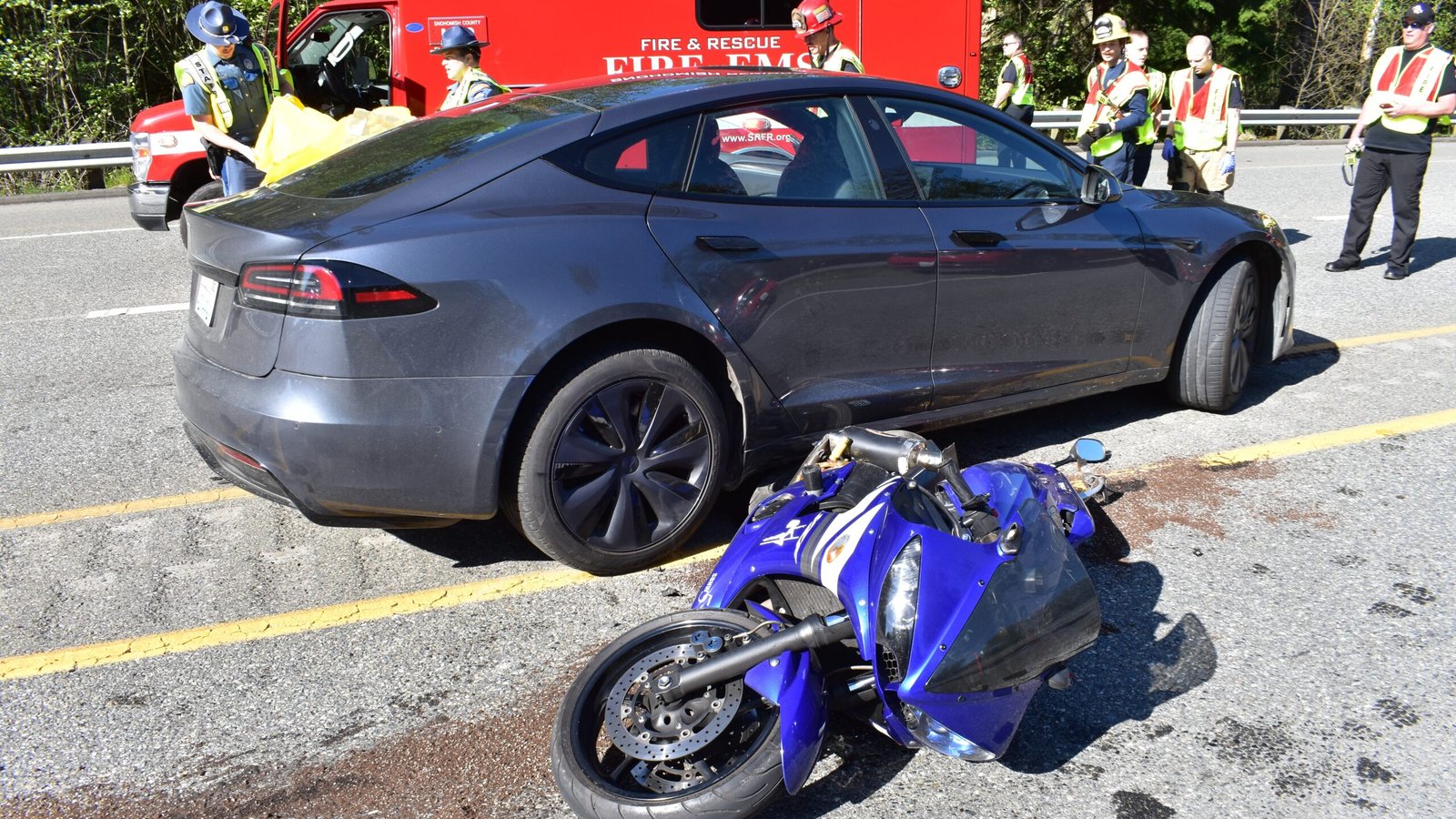
Roadside crashes can produce devastating injuries because a pedestrian has no protection against a moving vehicle.
Potential injuries may include fractures, spinal injuries, traumatic brain injuries, internal injuries, amputations and fatal injuries.
After emergency medical needs are addressed, determining exactly what happened becomes critical.
Evidence may include:
Dashcam footage. Your vehicle, the striking vehicle or another motorist may have recorded the collision.
Vehicle data. Modern vehicles may contain information relevant to speed, braking or other events preceding a crash.
911 and CHP records. Calls may establish when the disabled vehicle stopped and when assistance was requested.
Tow-company records. Dispatch timestamps may help establish the timeline.
Witnesses. Passing drivers or passengers may have seen whether the striking vehicle moved over, slowed down or drifted.
Photographs. Damage patterns, tire marks, debris, shoulder width and vehicle placement may become important.
Electronic evidence. In appropriate cases, evidence concerning cellphone activity may be relevant to whether distraction contributed to the collision.
This is one reason early investigation can matter.
Video gets overwritten. Vehicles are repaired. Witness memories fade.
What If a Tow Truck or Roadside Worker Is Hit?
The expanded law continues to protect tow-truck operators, emergency personnel and highway-maintenance workers.
These workers routinely perform their jobs within feet of moving traffic.
AAA’s research illustrates how serious that exposure is. Of the 123 roadside-assistance-provider fatalities studied between 2015 and 2021, many involved passing vehicles leaving the roadway or striking workers near disabled vehicles.
A roadside-worker collision may involve additional issues such as employer insurance, workers’ compensation, third-party claims and commercial vehicle evidence.
Those cases can become legally complex quickly.
Could More Than One Party Be Responsible?
Yes.
Consider a driver who swerves onto the shoulder because another vehicle suddenly changes lanes.
Or a commercial truck whose driver is distracted by a dispatch screen.
Or a roadside collision involving defective lighting, poor vehicle maintenance or another contributing factor.
Potential responsibility may extend beyond the person who physically struck the victim.
Depending on the facts, an investigation could involve:
- The driver
- A driver’s employer
- A commercial vehicle owner
- Another negligent motorist
- A vehicle or component manufacturer in an appropriate defect case
- A public entity in certain roadway-condition cases
Determining liability requires investigation—not assumptions.
What Should You Do If Your Vehicle Breaks Down?
Every roadside situation is different, and immediate safety comes first.
If you can safely move the vehicle completely away from traffic, do so. Activate your hazard lights. Call 911 when there is an emergency and obtain roadside assistance when appropriate.
Be extremely cautious about standing between vehicles or on the traffic-facing side of a disabled vehicle.
And if a collision occurs:
- Seek medical attention immediately.
- Report the collision to law enforcement.
- Photograph the scene if it is safe to do so.
- Preserve dashcam footage.
- Obtain witness information.
- Keep towing, repair and medical records.
- Be cautious about recorded insurance statements or quick settlements.
- Consider obtaining legal advice promptly when serious injuries are involved.
The Flashing Lights Are a Warning—and Now the Law Is Clearer
A disabled vehicle on the shoulder can happen to anyone.
A flat tire does not make someone careless.
An overheated engine does not make someone expendable.
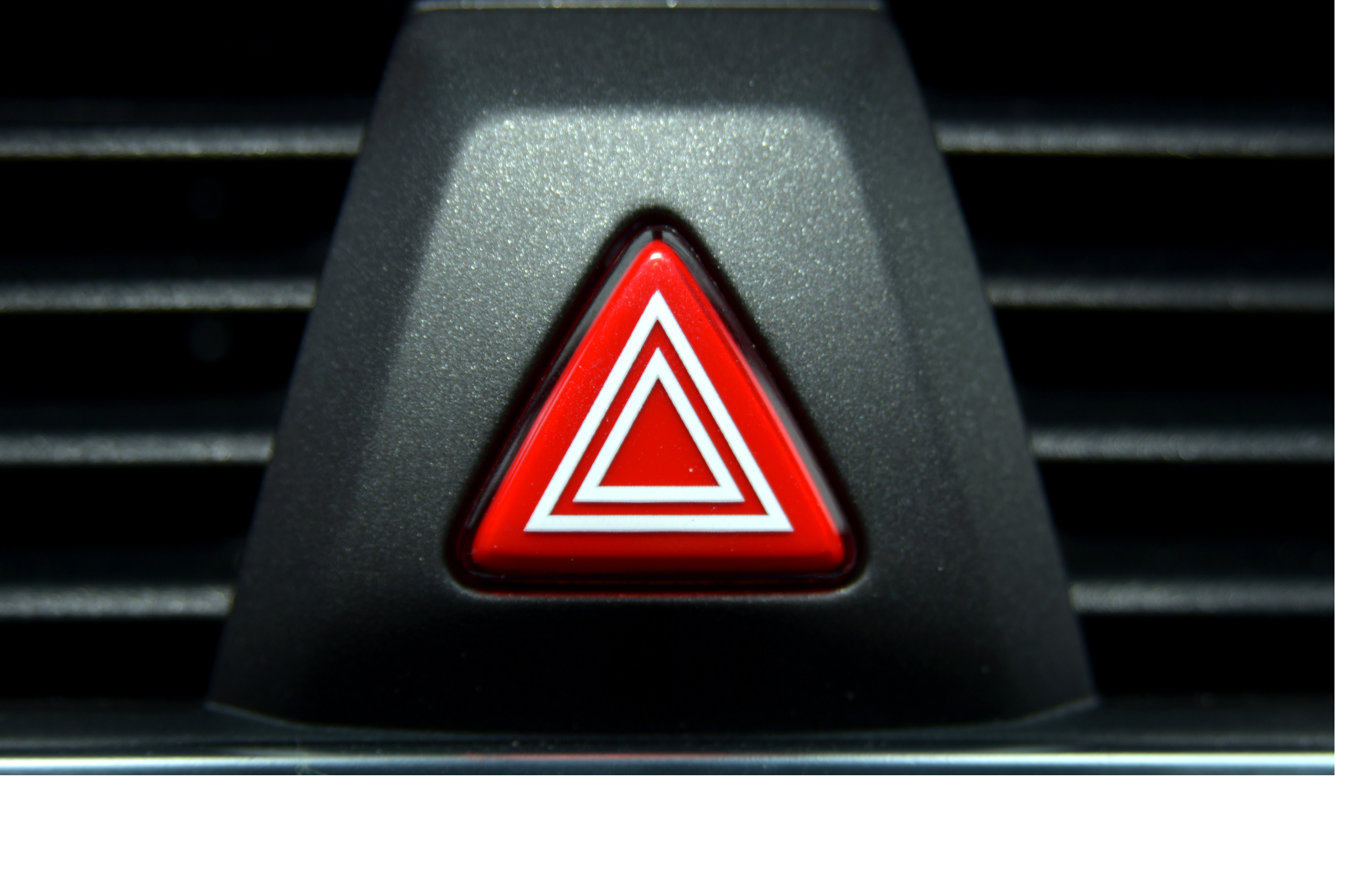
And hazard lights are not merely a courtesy to approaching motorists.
Under California’s expanded 2026 law, they can trigger an affirmative obligation for drivers to move over when safely possible—or slow down when they cannot.
If an approaching motorist ignores that warning and someone is injured, the few seconds before impact may become the most important seconds in the case.
Do not assume the insurance company will investigate every source of evidence for you.
If you or a family member was injured in a roadside collision, call Doyle Accident & Personal Injury Attorneys at 626-737-0036 for a free case evaluation.
Doyle has offices in:
Pasadena
301 N. Lake Avenue, 6th Floor
Pasadena, CA 91101
Alhambra
560 W. Main Street, Suite C-244
Alhambra, CA 91801
Monterey Park
199 W. Garvey Avenue, Suite 206
Monterey Park, CA 91754
Call 626-737-0036. The case evaluation is free.
A breakdown may be unavoidable.
A preventable roadside collision should not be dismissed as simply “bad luck.”
Glossary
AB 390: The California legislation that expanded the state’s Slow Down, Move Over law effective January 1, 2026.
Comparative Fault: California’s system for assigning percentages of responsibility when more than one party contributes to an accident.
Damages: Compensation that may be sought for legally recognized losses resulting from an injury.
Duty of Care: A legal obligation to act with reasonable care under the circumstances.
Hazard Lights: Flashing vehicle warning lights used to alert other motorists to a stopped vehicle or hazard.
Liability: Legal responsibility for an injury or loss.
Negligence: Failure to exercise reasonable care under the circumstances.
Roadside Assistance Provider: A tow operator, mobile mechanic, road-service technician or other person providing assistance to motorists.
Vehicle Code Section 21809: The California statute containing the state’s Slow Down, Move Over requirements.
References and Resources
- California Vehicle Code §21809 — Current Move Over requirements effective January 1, 2026.
- California Highway Patrol — New Year, New Laws: 2026 — CHP explanation of AB 390.
- California DMV — New Laws in 2026 — DMV summary of the expanded law.
- NHTSA — Move Over: It’s the Law — National explanation of Move Over laws and roadside safety.
- AAA Foundation for Traffic Safety — Highway Heroes at Risk — Research concerning roadside-assistance-provider fatalities.
- California FY2025 Annual Grant Application — California/NHTSA discussion of roadside-worker fatality data.
This article is provided for general informational purposes only and is not legal advice. Every accident claim depends on its individual facts, evidence, insurance coverage and applicable deadlines.
#CaliforniaMoveOverLaw #SlowDownMoveOver #CaliforniaAccidentLawyer #RoadsideAccidentLawyer #PasadenaCarAccidentLawyer #AlhambraAccidentLawyer #MontereyParkAccidentLawyer #LosAngelesCountyAttorney #DisabledVehicleAccident #TowTruckAccident #RoadsideSafety #CaliforniaPersonalInjury #CarAccidentAttorney #PasadenaPersonalInjuryAttorney #DoyleAccidentAttorneys